
Recently, I heard someone say that ancient people tried to control the gods, and in a few moments, I had the germ of a story for a novel, set in a post-apocalyptic agrarian society where tribes and settlements battle each other for supremacy.
Part One
Turner is in his twenties, but without proper employment. He just can’t be bothered, and he’s looking for shortcuts. Farming and animal husbandry sounds like too much hard work, and he doesn’t want to be a raider, because he might die. He’s a bit of a loner, bit of a misfit.
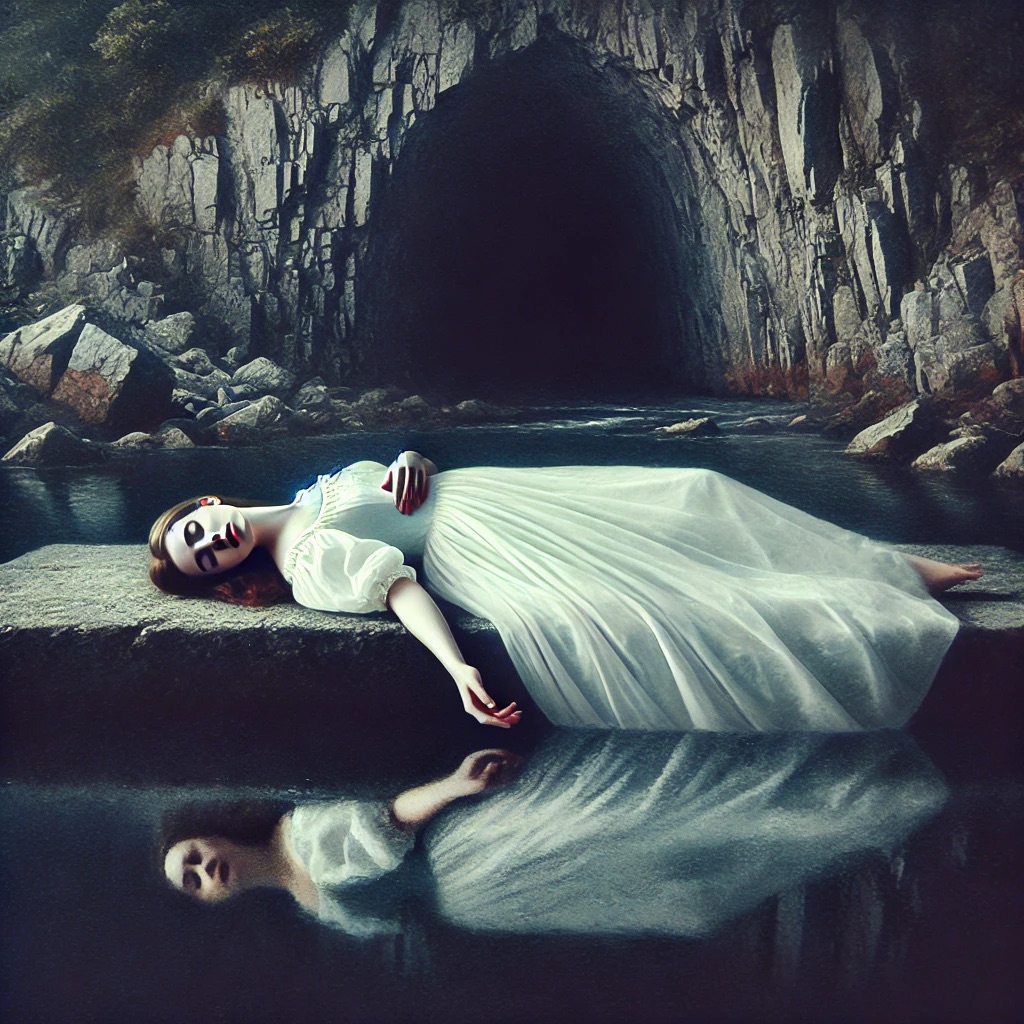
When a young woman goes missing and is later found drowned, speculation is rife. She was swimming alone at a waterhole near a cave, about a half hour walk from the settlement. Some say it’s bandits loose in the wilds, and that the raiders need to increase their patrols. Some say it was a jilted lover. Others say she suicided.
Turner’s curiosity is piqued. No explanations seem to make sense. He begins to investigage. It turns out this is not the first woman who died at the waterhole. Two other women died there in past decades. There are some curious coincidences. All three women were swiming alone, the old wives say, all three were in the “ripe” time of the month. “It was the Nargun,” the old women say.
Instead of dismissing the old women, like others do, Turner humours them. They believe that a strange spirit lives in the cave, lives in the water, which is why they have always discouraged people from visiting. The Nargun is dangerous and deserves respect.
Turner, with nothing better to do, and with an avid fascination for the strange and twisted, decides to put some time and attention into debunking the old wives tale.
Turner journeys to the cave and the waterhole and explores. He discovers a small detail about the cave (not sure what it would be) that rules out the possibility of bandits and suicide. The only explanation that fits the evidence is a monster living in the cave.
Turner turns his mind to the study of this so-called Nargun. He can barely take himself seriously and expects it is simply a wild animal, that can scent women. Through a series of A/B tests, where he presents various items at the mouth of the cave, such as seedlings, ripe pawpaws, a goat on heat etc, Turner comes to the conclusion that the Nargun is not an animal and it is not human. It is attracted by fertility or fecundity (I think that’s the word?). Perhaps its attraction is hate. He’s not sure. It is cruel, it is good at counting and understands symbolism.
It begins to Dawn on Turner that perhaps he can learn enough of the Nargun’s ways to harness its cruelty and power against the enemies of his settlement. In turn this would give him recognition, influence, and perhaps some power within his own society.
But communication with the Nargun is breaking down. All indicators are that the Nargun wants another fertile female. The Nargun is unclear what it wants with her. Turner has a friend, an acquaintance, who is a little eccentric. Turner does not know whether he finds her attractive or repulsive. Her name is Mirin.
End of part one.


One response to “Novel outline. The monster in the cave.”
[…] this is a pretty yuck storyline. Part One is “The Monster In the Cave.” I want to capture the horror that the ancients must have felt when they discovered what the […]
LikeLike